


 Home
Home Apr 28,2026
Professional Installation Guide: Top-Hung Trackless Sliding Glass Doors
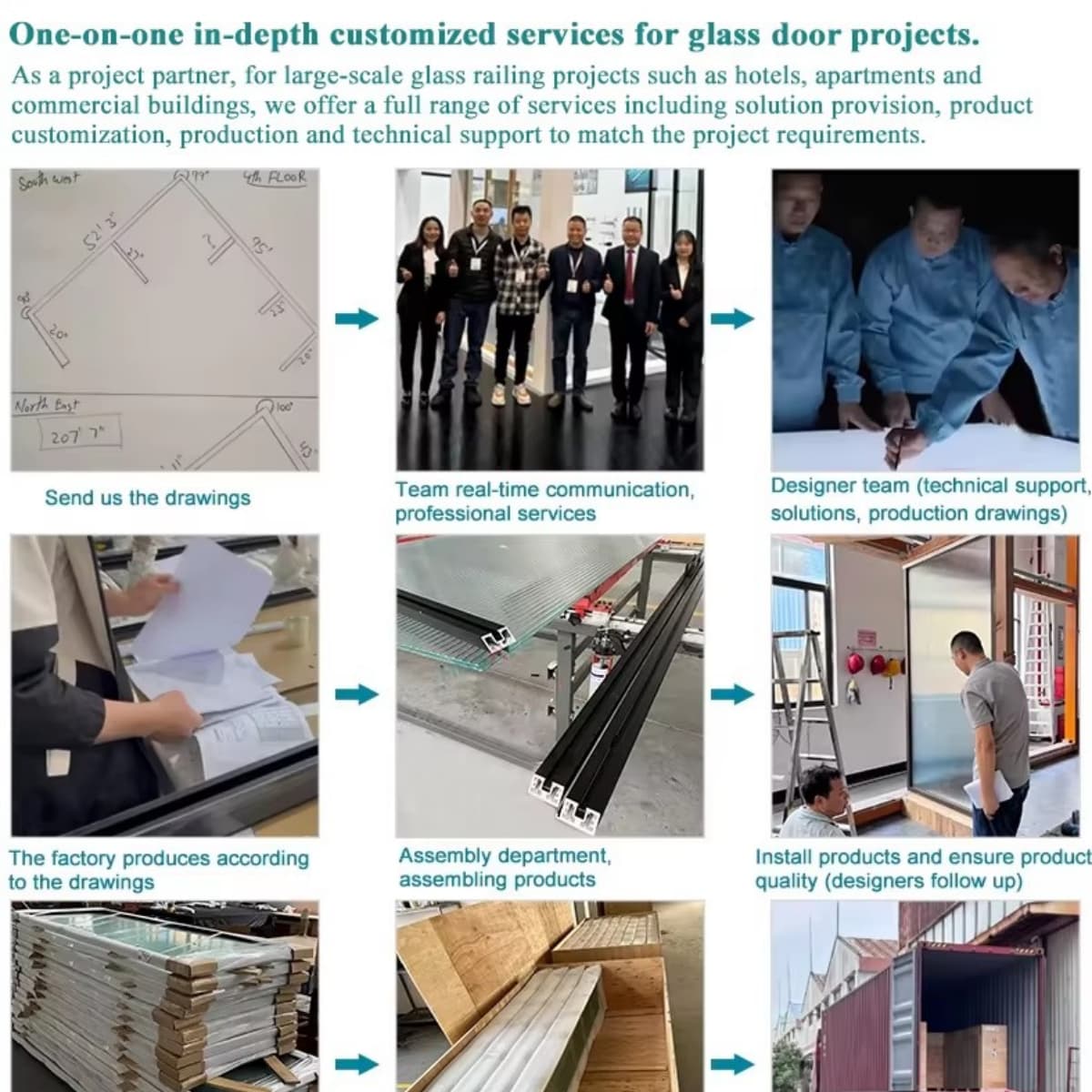
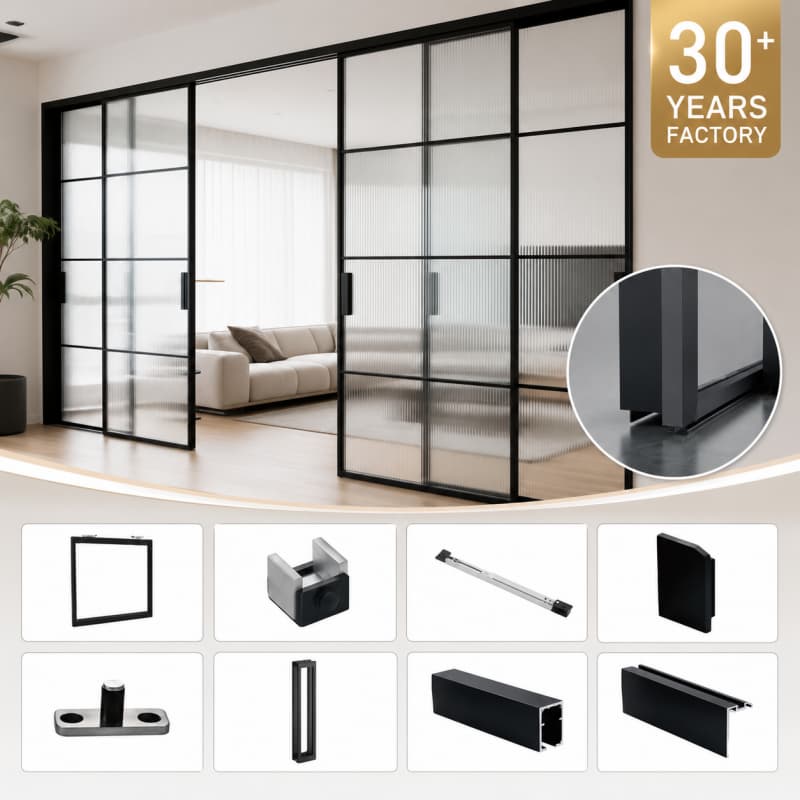
Installing a trackless sliding door requires precision. Because there is no bottom track to support the weight, the overhead structure and the alignment of the top rail are critical. Follow this step-by-step factory guide for a perfect, "floating" finish.
Phase 1: Pre-Installation Checklist
Before you begin, ensure your site meets these three requirements:
-
Structural Header: The ceiling or wall must be concrete, a steel beam, or reinforced solid timber. Do not mount directly to drywall/plasterboard.
-
Floor Leveling: While the door "hangs," the floor must be relatively level so the gap at the bottom remains consistent.
-
Weight Verification: Ensure your header can support the weight of the glass ($F = m \cdot g$).
Phase 2: Step-by-Step Installation
Step 1: Secure the Top Track
This is the most important step.
-
Measurement: Mark the height where the track will sit. Ensure you account for the height of the rollers and the desired floor clearance (usually 8mm - 12mm).
-
Leveling: Use a Laser Level. If the track is tilted by even $1\text{mm}$, the door will "ghost slide" (open or close by itself).
-
Fixing: Drill pilot holes into the header and secure the track using heavy-duty expansion bolts or structural screws provided in the HDSAFE kit.
Step 2: Prepare the Glass Panel
-
Hardware Attachment: Attach the roller hangers to the top of the glass panel.
-
Torque: Ensure the clamps are tightened to the factory-specified torque to prevent the glass from slipping, but do not over-tighten to the point of cracking the glass (use the provided rubber gaskets).
Step 3: Hang the Door
-
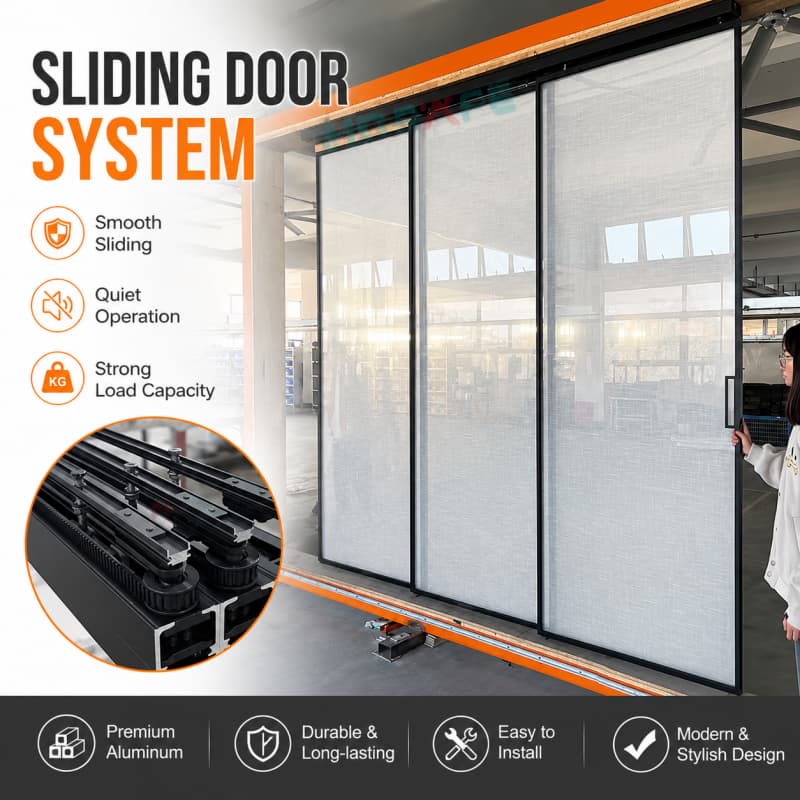
Lifting: This usually requires two people. Lift the glass panel and slide the rollers into the top track.
-
Stoppers: Immediately install the End Stoppers at both ends of the track to prevent the door from sliding out during the rest of the installation.
Step 4: Install the Hidden Floor Guide
This is the "secret" to a stable trackless door.
-
Positioning: Place the small floor guide at the edge of the door opening (it should never be visible in the middle of the walkway).
-
Alignment: The guide fits into a groove at the bottom of the HDSAFE frame or sits against the glass. It prevents the door from swinging like a pendulum.
Step 5: Adjust and Test
-
Vertical Adjustment: Use the adjustment bolts on the rollers to raise or lower the door until it is perfectly plumb.
-
Soft-Close Activation: If your model includes a Soft-Close Damper, slide the door slowly to ensure the actuator engages the damper correctly.
Phase 3: Troubleshooting & Maintenance
| Issue | Cause | Solution |
| Door slides open by itself | Track is not level | Re-adjust track using a laser level. |
| Grinding noise | Debris in the track | Clean the top rail with a dry cloth or compressed air. |
| Door is hard to move | Roller height is too low | Raise the rollers using the adjustment screw to reduce floor friction. |
Pro Tip from GlassDoorFactory
"Always perform a 'dry run' of the rollers in the track before hanging the heavy glass. This ensures the track is free of obstructions and the soft-close mechanism is oriented in the correct direction."
 Can a top-hung door support heavy glass?
 Mar 21,2026