


 Home
Home Dec 31,2025
Trackless Sliding Doors Advantages and Applications – A Modern Solution for Seamless Spaces
Meta Description: Discover the unique advantages and versatile applications of trackless sliding doors. Learn why they’re ideal for modern homes, commercial spaces, and areas where floor space, cleanliness, and accessibility matter most.
Introduction
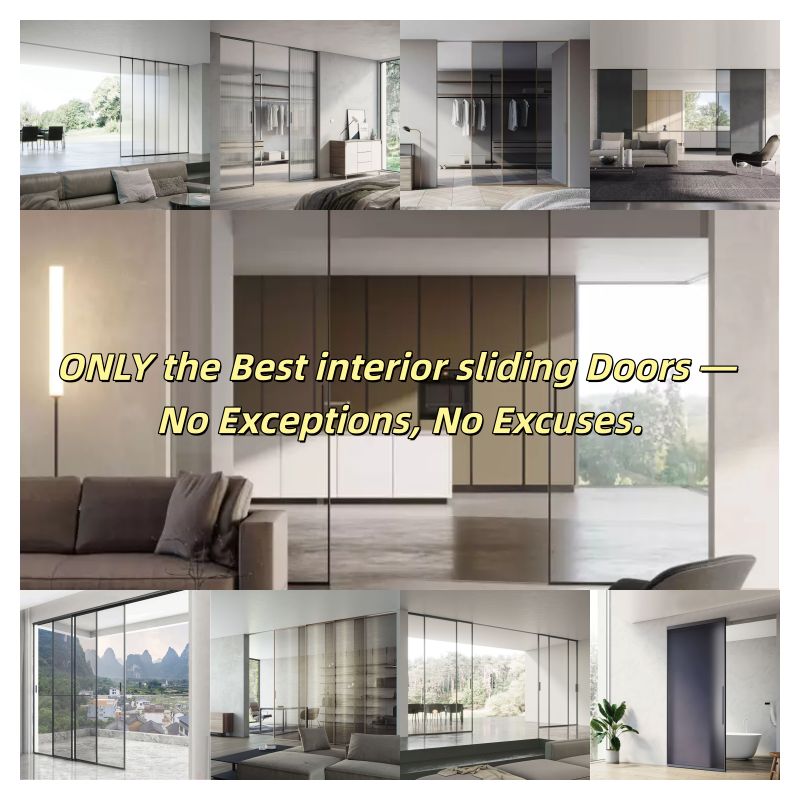
In the evolving world of architectural design, trackless sliding doors have emerged as a sleek, functional innovation. Unlike traditional sliding doors that rely on floor-mounted tracks, trackless systems suspend panels from an overhead rail, leaving the floor completely clear. This seemingly small change delivers major benefits in aesthetics, usability, and maintenance.
In this article, we’ll explore the advantages and applications of trackless sliding doors, showing why they’re becoming a go-to choice for contemporary residential and commercial projects.
What Are Trackless Sliding Doors?
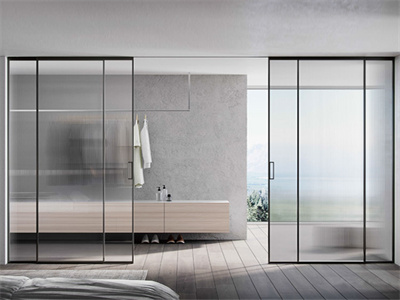
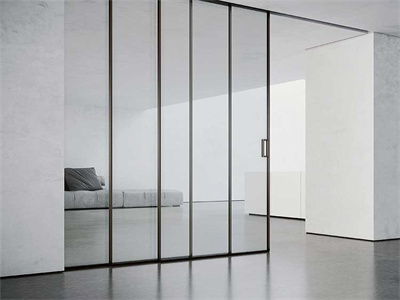
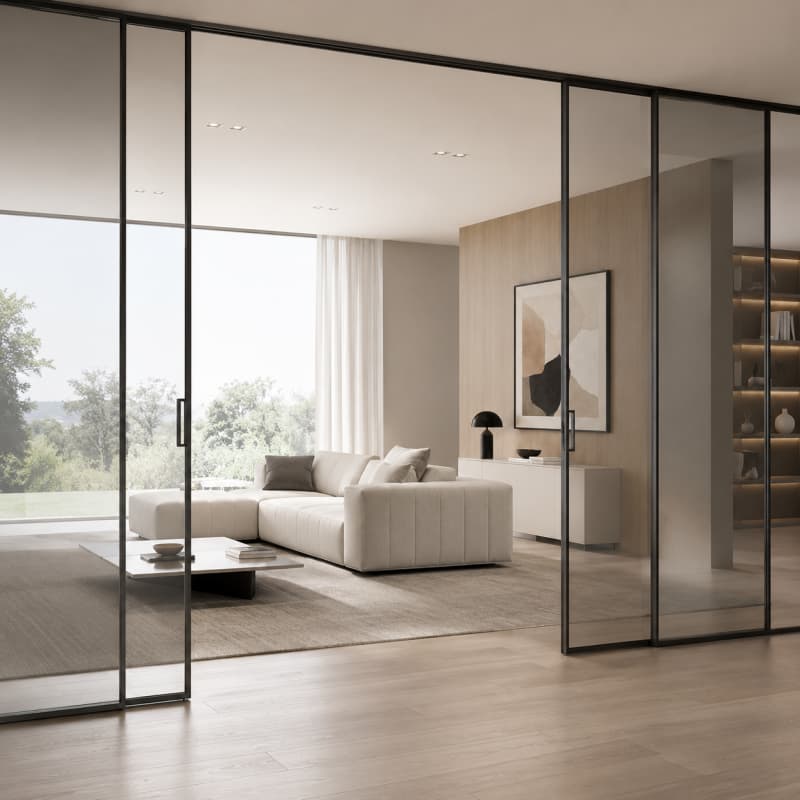
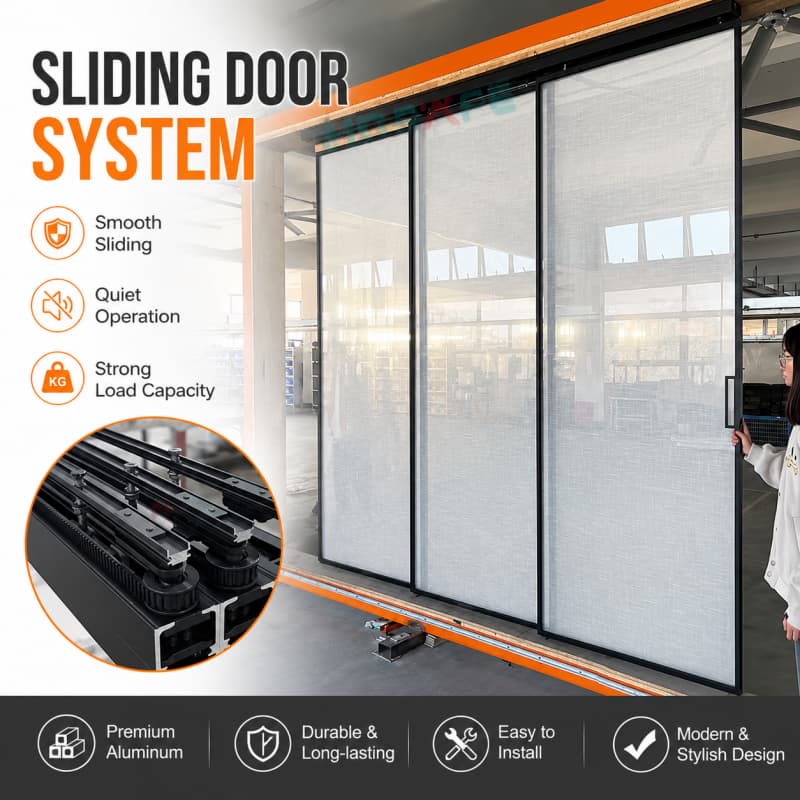
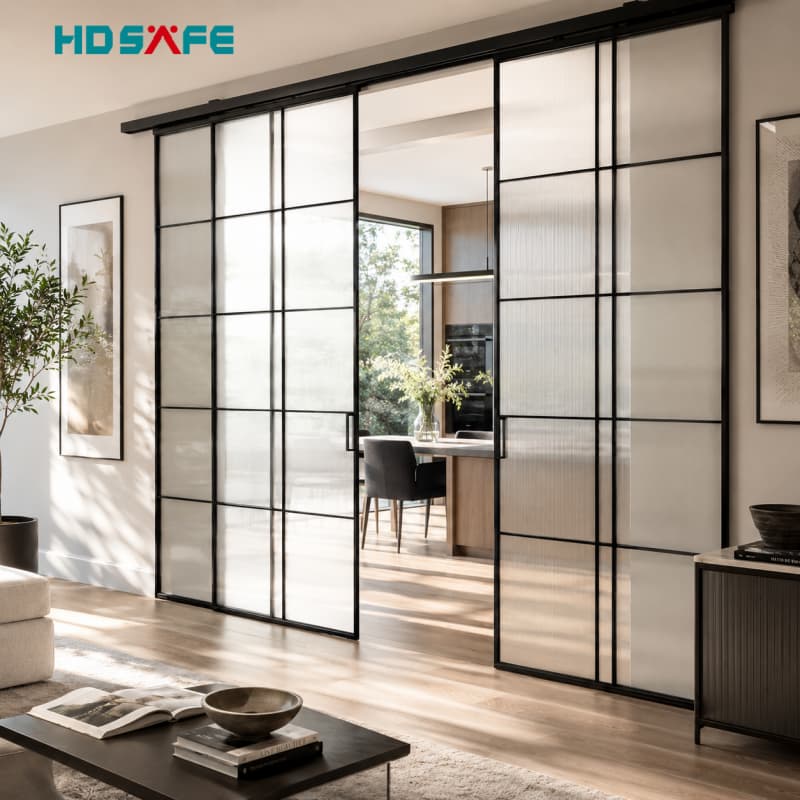
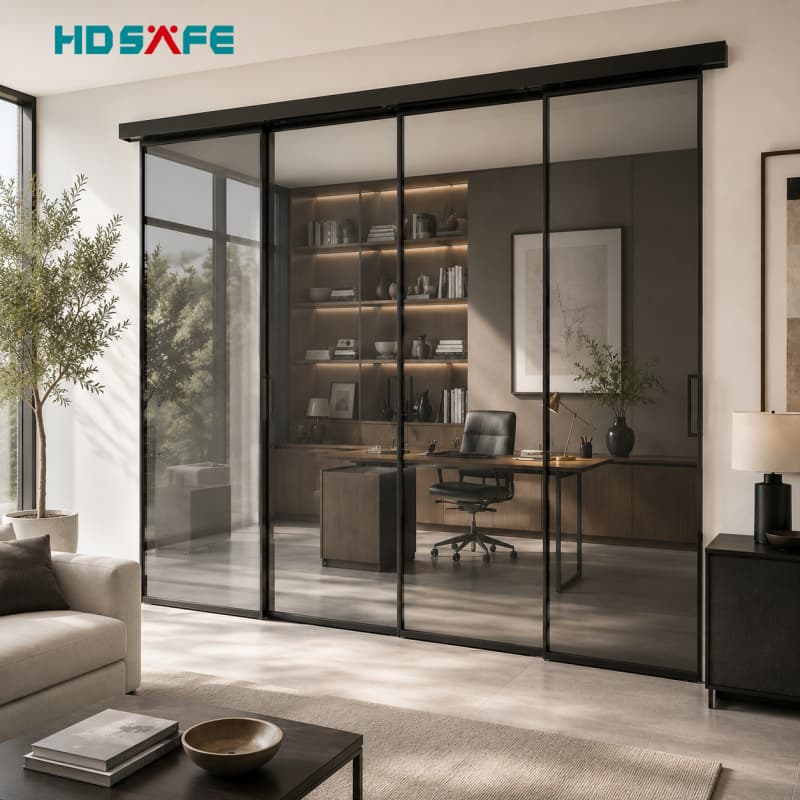
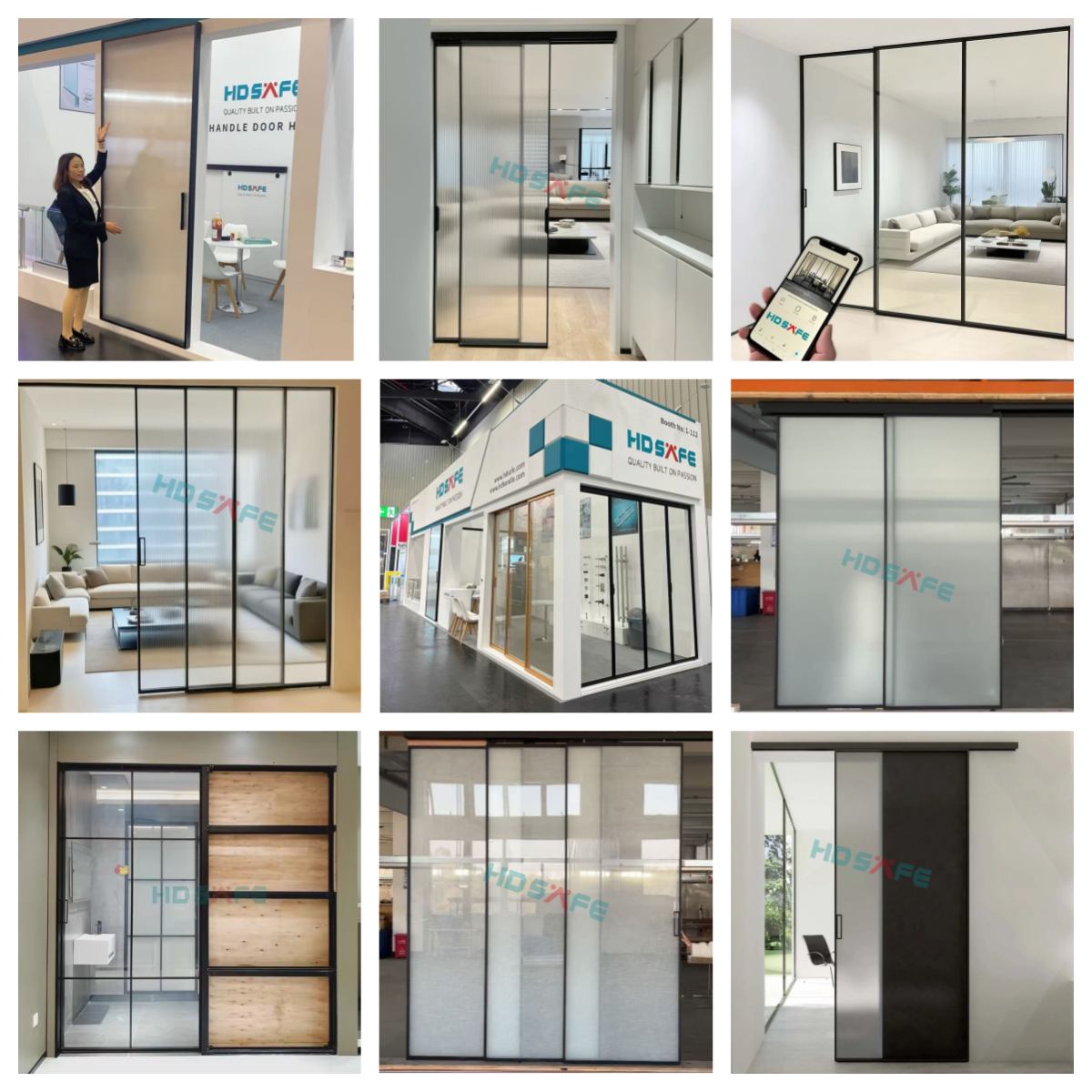
Trackless sliding doors (also called floor-free sliding doors) operate using an overhead track and hangers, removing the need for any guiding rail on the floor. The panels glide smoothly across the opening and stack neatly to one or both sides when open.
They are available in various styles:
-
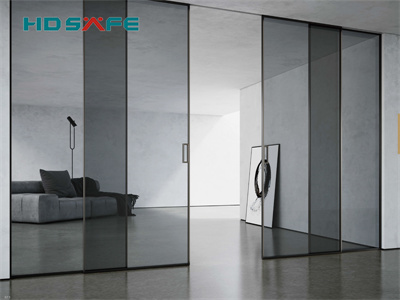
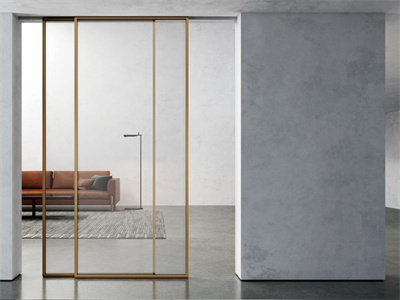
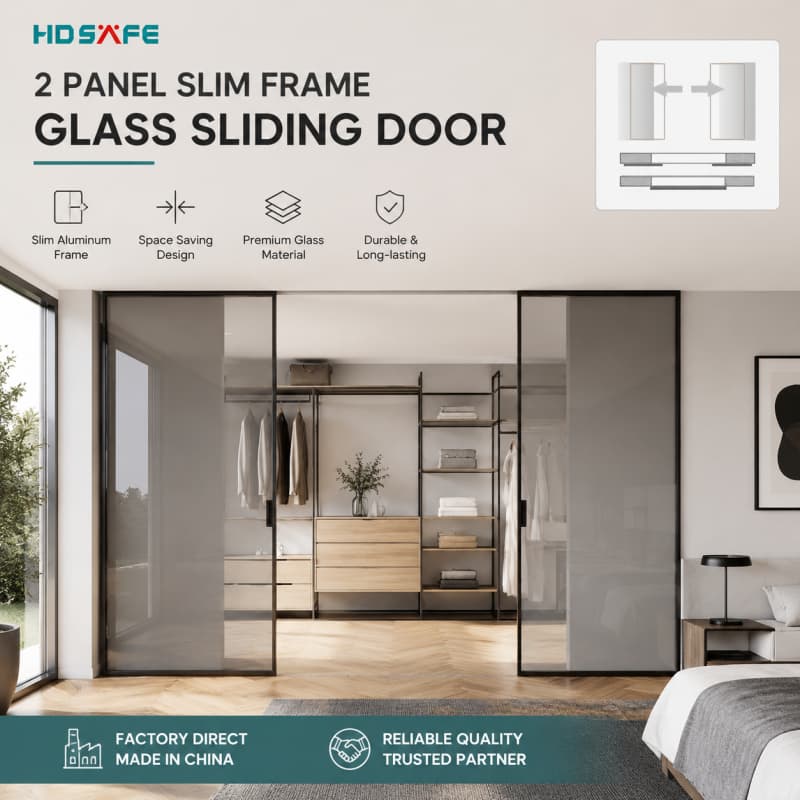
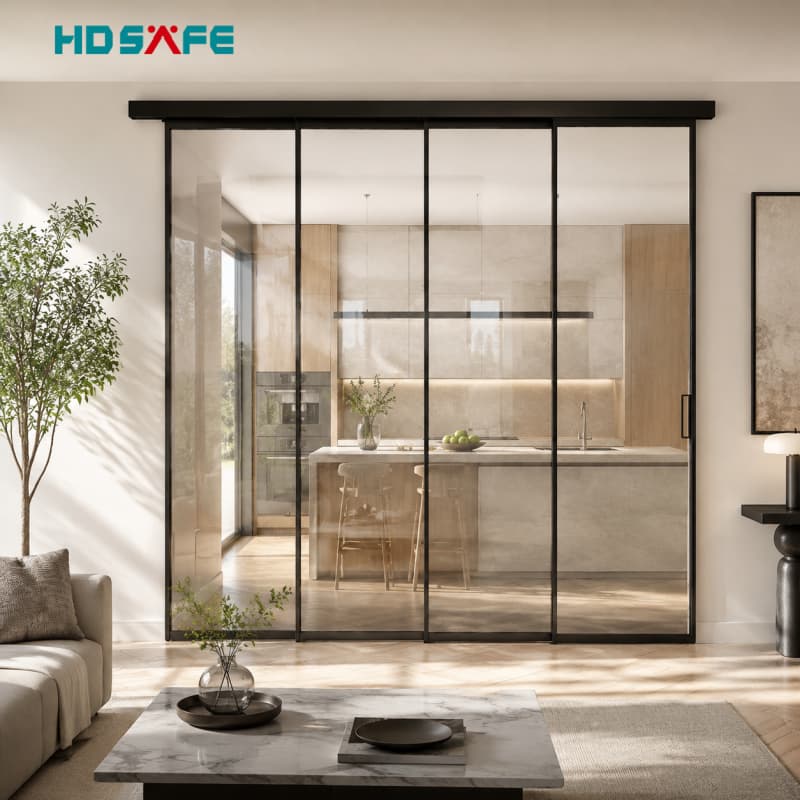
Glass trackless doors (framed or frameless)
-
Wood or composite panel trackless doors
-
Industrial or barn-style trackless doors (with decorative hardware)
Because there’s no bottom track, the floor remains unbroken — a game-changer for design flexibility and practicality.
Key Advantages of Trackless Sliding Doors
1. Uninterrupted Flooring
Without a bottom track, the floor surface stays completely smooth and continuous. This is especially beneficial for:
-
Hardwood, tile, or polished concrete floors where tracks would disrupt the pattern
-
Wheelchair users, strollers, and carts that need a clear path
-
High-end interiors where visual continuity is a priority
2. Enhanced Aesthetics
Trackless doors create a clean, minimalist look:
-
No visible floor tracks to interrupt sightlines
-
Ideal for modern, industrial, and luxury designs
-
Allows flooring materials and patterns to shine without obstruction
3. Improved Accessibility
Removing the floor track eliminates a common tripping hazard and barrier for:
-
People with mobility aids (wheelchairs, walkers)
-
Elderly individuals and children
-
Commercial spaces requiring ADA compliance
4. Easier Cleaning and Maintenance
Floor tracks tend to collect dirt, dust, and debris, requiring frequent cleaning. With trackless systems:
-
No grooves to trap grime
-
Simplified mopping, vacuuming, and polishing
-
Reduced wear and tear on flooring around the doorway
5. Space Optimization
Since panels are suspended from above, there’s no need to leave clearance for floor guides. This is helpful in:
-
Narrow hallways
-
Tight rooms where floor space is at a premium
-
Areas with furniture or fixtures close to the opening
6. Flexible Layout Changes
Without a fixed floor track, rearranging furniture or changing room layouts is easier because there’s no track to work around or avoid.
7. Seamless Indoor-Outdoor Flow
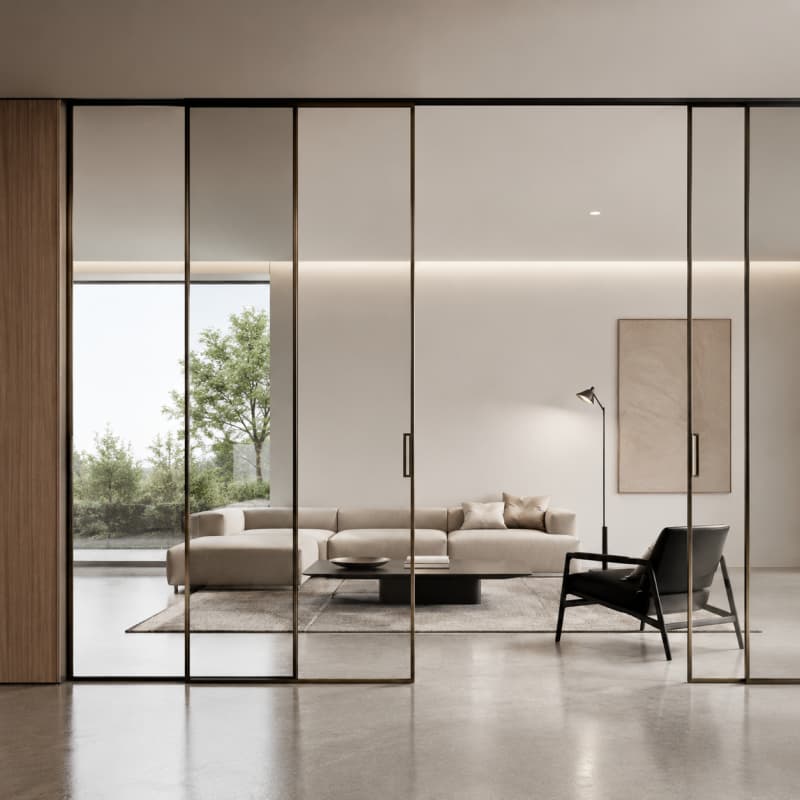
Trackless glass doors excel at connecting indoor and outdoor spaces without a visual or physical interruption, enhancing the sense of openness.
8. Versatility in Materials and Styles
Trackless technology works with:
-
Frameless glass for ultra-modern looks
-
Wood panels for warmth and texture
-
Industrial metal and reclaimed wood combinations
Offering design freedom across residential and commercial settings.
9. Safety and Durability
Modern trackless systems use heavy-duty overhead rollers and reinforced hangers to ensure smooth, safe operation even with large, heavy panels. Many feature soft-close mechanisms to prevent slamming.
10. Customization Potential
Trackless doors can be tailored in size, panel quantity, opening direction (left/right/center), and finish to suit specific project needs.
Applications of Trackless Sliding Doors
1. Residential Applications
a) Living Room to Patio/Deck
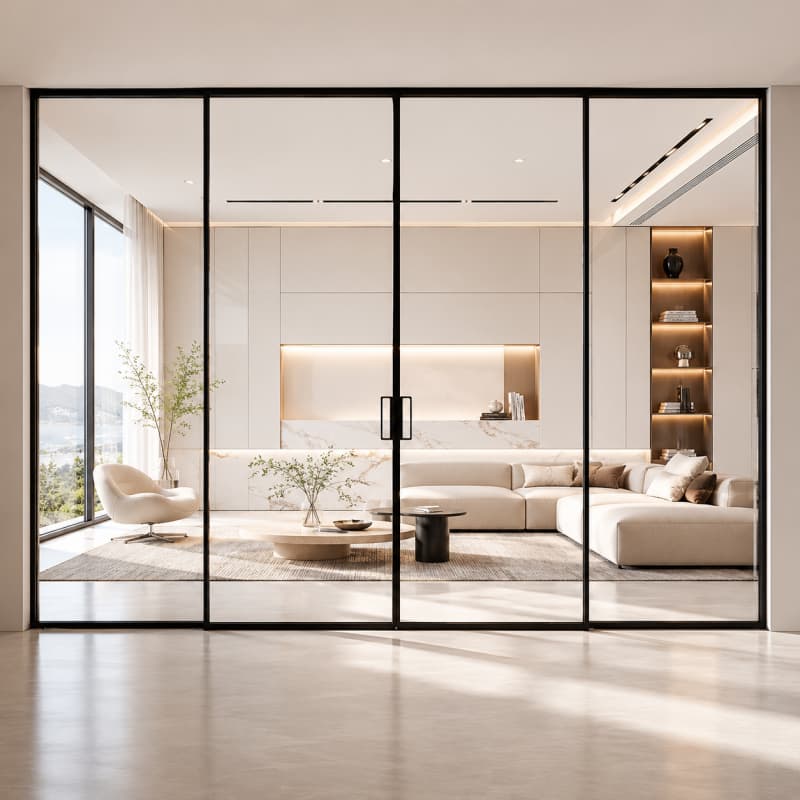
Trackless glass doors create a dramatic, unobstructed view and easy access to outdoor entertaining spaces without floor track interference.
b) Master Bedroom Balcony Access
Perfect for bedrooms that open onto a balcony, keeping flooring pristine and enabling quick emergency egress.
c) Room Dividers
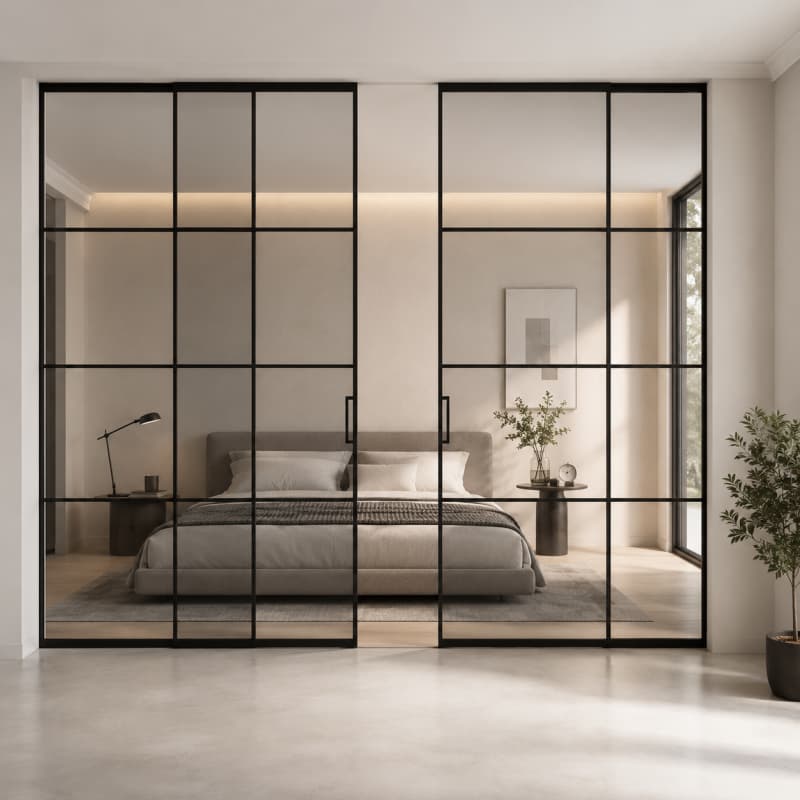
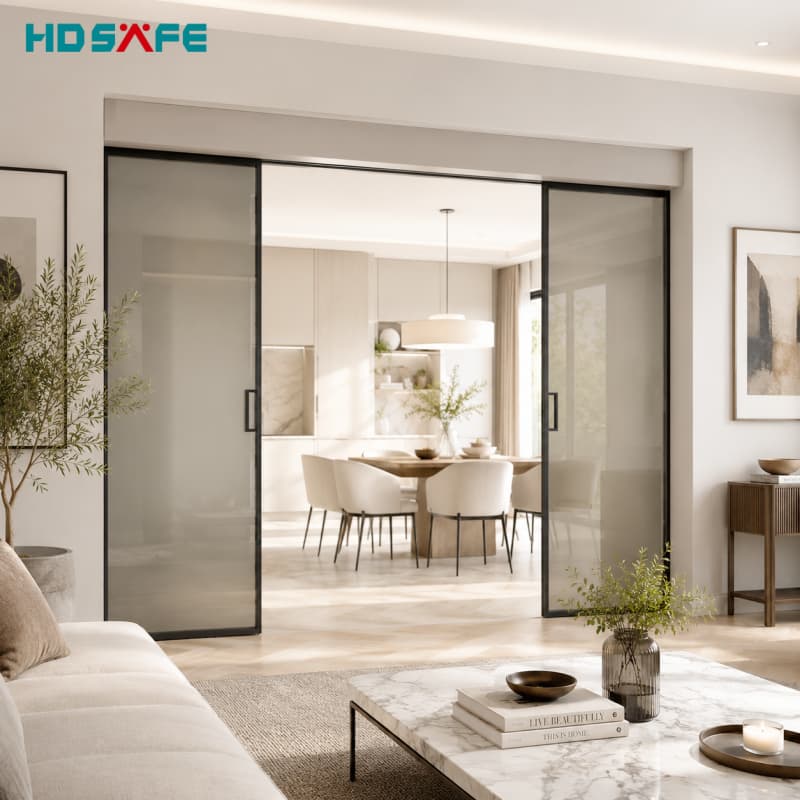
Use trackless glass or wood panels to divide living/dining areas, home offices, or studio apartments while maintaining light flow and an open feel.
d) Walk-In Closets
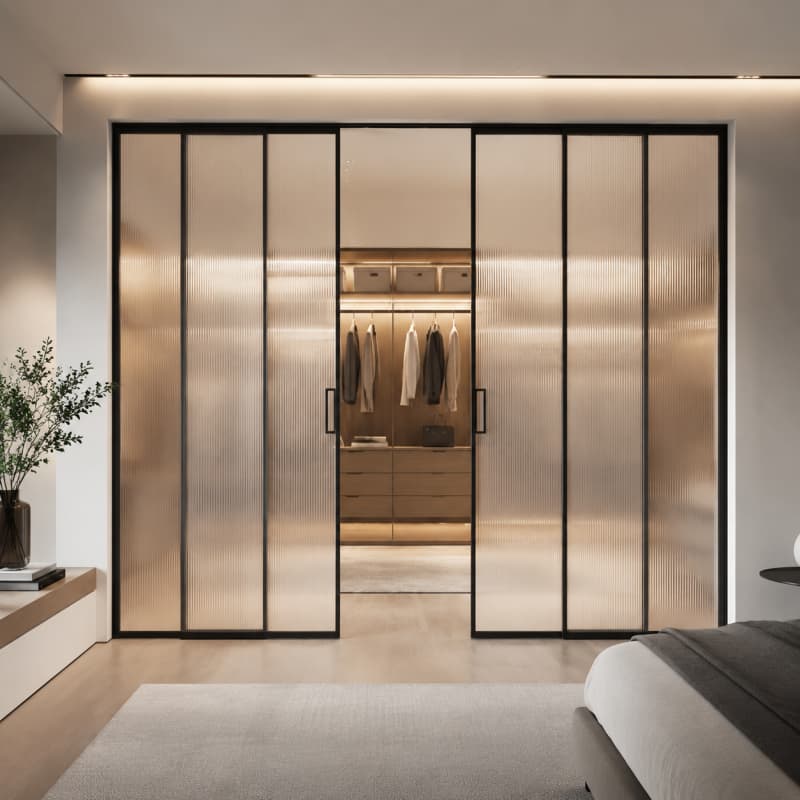
Trackless bypass or barn-style doors give closet fronts a sleek, high-end appearance without disrupting floor finishes.
e) Bathrooms (Frosted or Textured Glass)
Provide privacy while keeping bathroom floors smooth and accessible — ideal for wet areas where tracks could collect water and soap scum.
f) Home Theaters or Studios
Create acoustically separated spaces with trackless solid or acoustic-panel doors that don’t interfere with flooring setups.
2. Commercial Applications
a) Office Partitions
Glass trackless doors divide meeting rooms or private offices while preserving an open, light-filled workspace. Easy reconfiguration supports flexible office layouts.
b) Retail Storefronts
Trackless glass entrances offer a clean, welcoming look and simplify customer traffic flow — no track to trip over or clean around.
c) Hotels & Hospitality
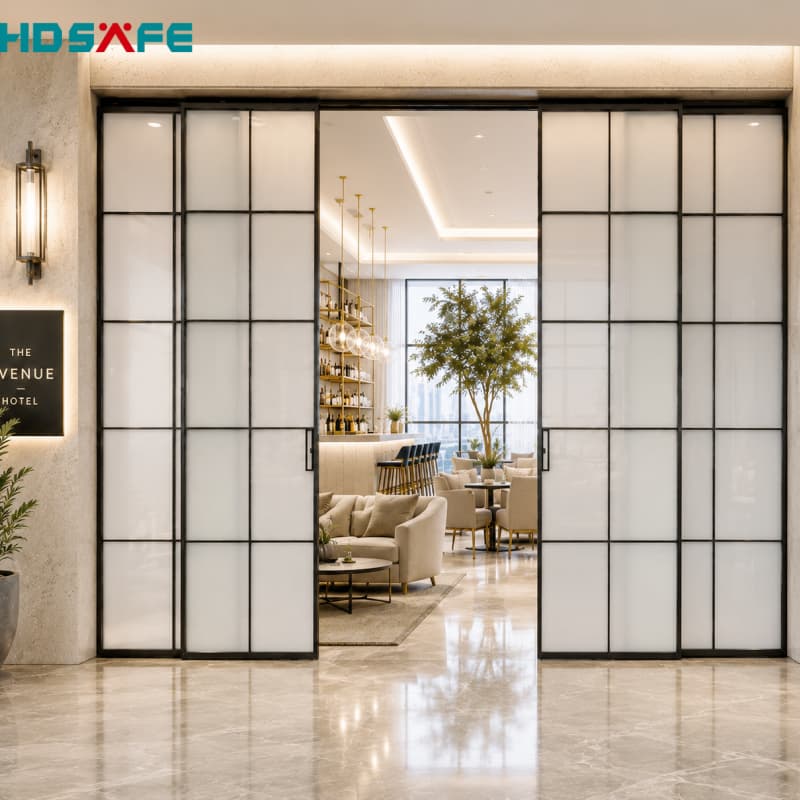
Luxury hotels use trackless sliding doors for balcony access in suites and for dividing dining or lounge areas, elevating the guest experience.
d) Restaurants & Cafés
Open kitchens or patio sections benefit from trackless systems that maintain hygiene standards (no track crevices for food debris).
e) Healthcare Facilities
Clinics and hospitals use trackless doors for patient rooms and treatment areas, ensuring easy wheelchair access and simplified sanitation.
f) Museums & Galleries
Trackless glass doors allow flexible display area configurations without floor distractions, supporting curators’ design visions.
Materials Used in Trackless Sliding Doors
|
Material |
Benefits |
Typical Applications |
|---|---|---|
|
Aluminum |
Strong, slim profiles; corrosion-resistant |
Modern glass doors, large openings |
|
Wood/Composite |
Warm aesthetics, customizable finishes |
Room dividers, barn-style doors |
|
Glass (Tempered/Laminated) |
Maximizes light, safety |
Patio, balcony, office partitions |
|
Steel/Metal |
Industrial strength, bold look |
Loft spaces, commercial storefronts |
The choice depends on design intent, climate, security needs, and budget.
Design Considerations for Trackless Sliding Doors
-
Structural Support – Overhead beams or reinforced ceilings must handle the door’s weight.
-
Ceiling Height – Adequate clearance needed for stacked panels when doors are open.
-
Panel Weight – Heavier doors require more robust hangers and rollers.
-
Operation – Manual vs. motorized options depending on frequency of use and panel size.
-
Acoustics & Insulation – Solid-core or double-glazed panels improve soundproofing and thermal performance.
-
Safety Compliance – Ensure ADA compliance and fire-rating requirements where applicable.
Comparison: Trackless vs. Traditional Sliding Doors
|
Feature |
Trackless Sliding Doors |
Traditional Sliding Doors |
|---|---|---|
|
Floor Track |
None |
Required (floor-mounted) |
|
Visual Continuity |
Uninterrupted |
Interrupted by track |
|
Accessibility |
Excellent |
May have tripping hazard |
|
Cleaning |
Easier |
Tracks need regular cleaning |
|
Space Requirement |
Minimal |
Needs clearance for track |
|
Design Flexibility |
High |
Limited by track placement |
|
Cost |
Generally higher |
More affordable |
Maintenance Tips for Trackless Sliding Doors
-
Inspect overhead tracks and rollers monthly for dust and debris.
-
Lubricate moving parts periodically for smooth operation.
-
Check hangers and bolts for tightness and wear.
-
Clean glass or panels with appropriate non-abrasive products.
-
Ensure proper alignment to prevent uneven sliding.
Conclusion
Trackless sliding doors combine cutting-edge functionality with sophisticated design, eliminating the limitations of traditional floor-mounted systems. Their advantages — uninterrupted flooring, enhanced accessibility, easier maintenance, and striking aesthetics — make them ideal for a wide range of residential and commercial applications.
From luxury homes with seamless indoor-outdoor living to modern offices and hospitality venues, trackless sliding doors offer a versatile solution that meets the demands of contemporary lifestyles and design priorities. Investing in a trackless system means choosing beauty, practicality, and accessibility without compromise.
 How to Choose Between Barn Doors and Pocket Doors – A Complete Comparison Guide (2025)
 Oct 20,2025